
No hidden costs, clear and honest pricing. 3 year warranty on all chargers we install.
3. Fixed fee installation, usually within 7 days




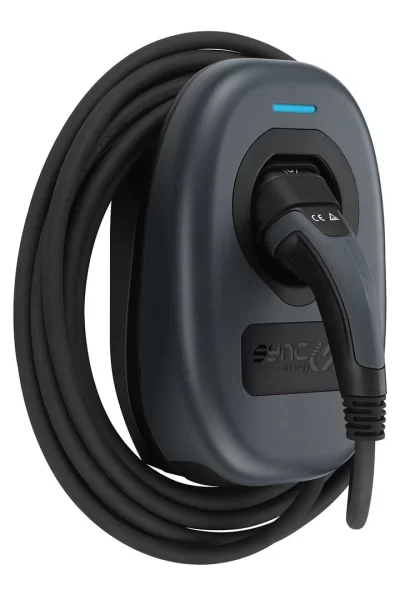
We also install Ohme, Easee, Rolec, Hydra and most other EV brands

The Sync Energy charger doesn’t just perform — it looks the part too. Choose from 9 interchangeable colour covers to find the perfect finish for your home’s exterior.
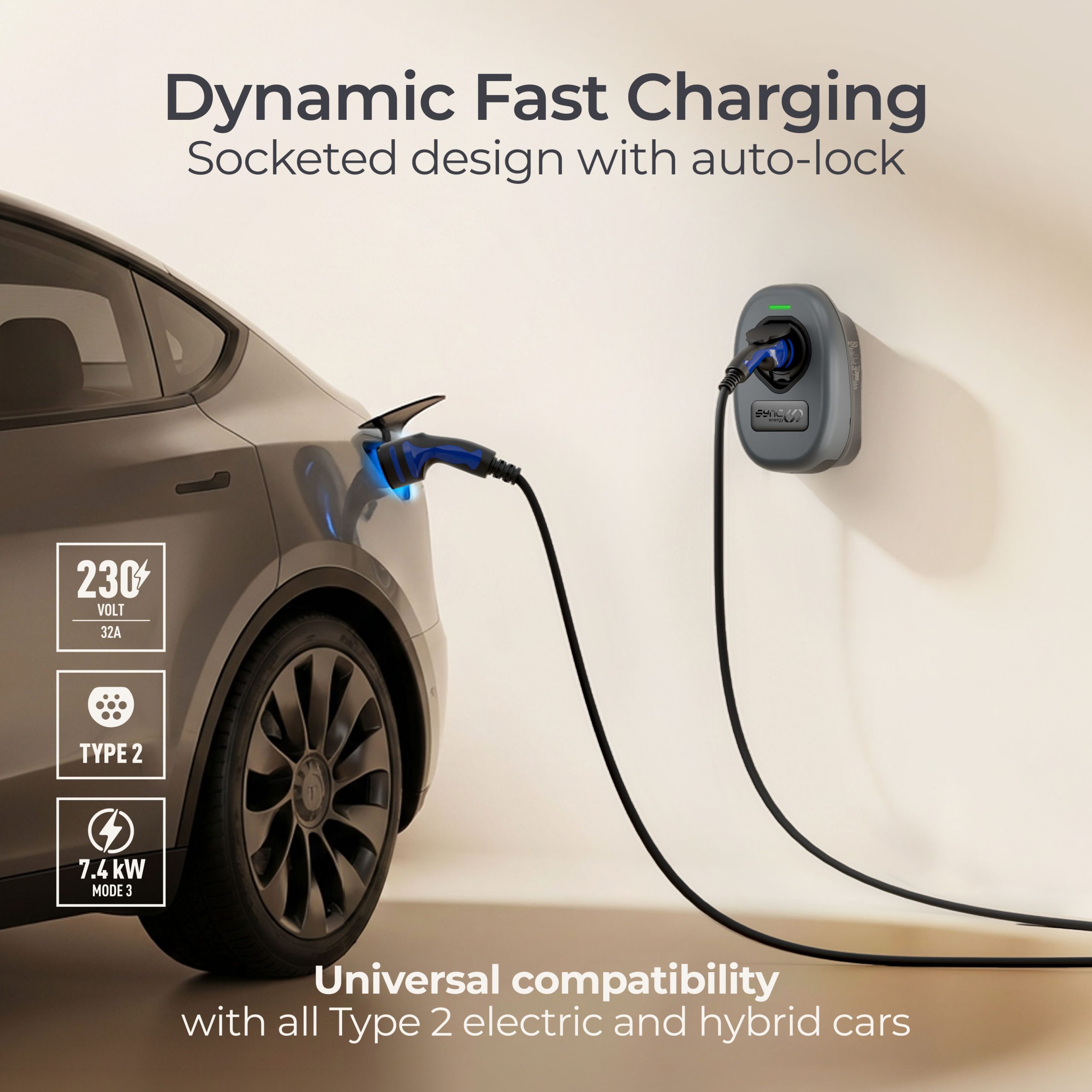
Take full control of your home charging with smart system integration, Type 2 compatibility for electric and hybrid vehicles, and built-in auto lock for added security.
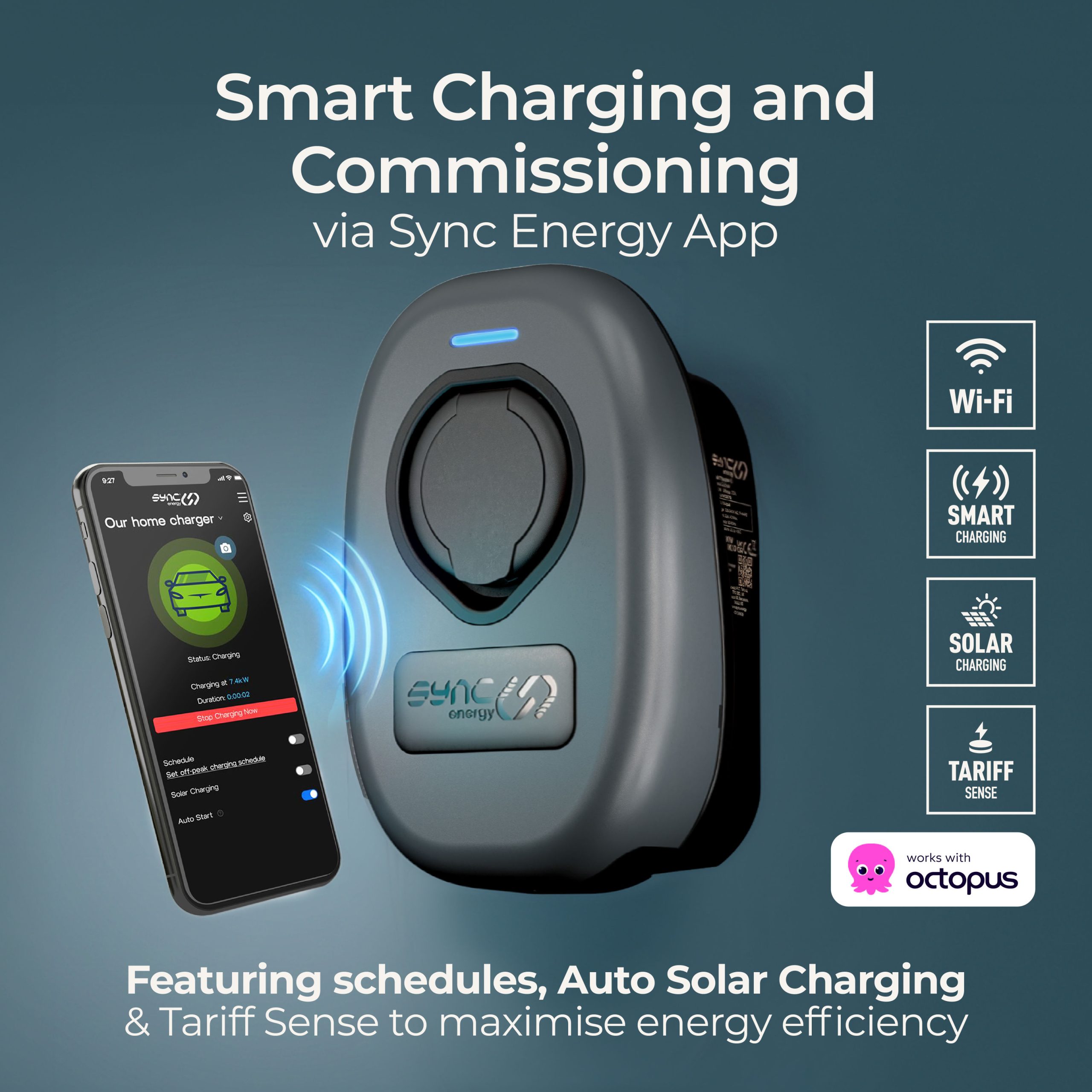
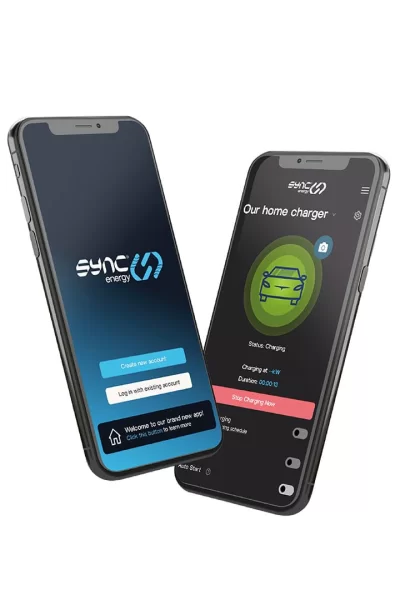
The Sync Energy app puts you in the driving seat. Track exactly how much energy you’re using, see your real time costs and savings, and take full control of how your energy is used and stored — with Tariff Sense keeping your tariff details always at your fingertips.















Our team is passionate about cleaner energy and making the switch to electric vehicles as simple as possible. We take pride in every installation and are committed to delivering high-quality workmanship, reliable advice and excellent customer service.
For every charger we install, we will plant a tree in rainforest parts of the world via Tree App
The best home EV charger depends on your car, electricity supply and how quickly you need to charge. A 7kW smart EV charger is usually the best choice. Chargers with an equal kW rating will charge at the same speed, the difference in chargers is how they look, the functionalities of the app and the length of charging lead.
It depends on your circumstances. The main OZEV EV Chargepoint Grant is available to renters and people who own and live in a flat. If you own and live in a house with private off-street parking, such as a driveway or garage, you would not normally qualify for this grant. However, homeowners without off-street parking may be eligible for a separate grant if they are installing an approved cross-pavement charging solution.
You can check the different EV chargepoint grants available on the GOV.UK EV chargepoint grants page: Electric vehicle chargepoint grants – GOV.UK.
From 1 April 2026, the maximum grant increased from £350 to £500 per socket, covering up to 75% of the cost of buying and installing the chargepoint. Funding for the current home charging schemes is confirmed until 31 March 2027. Full details of the 2026 changes are available here: OZEV grant changes from 1 April 2026 – GOV.UK.
For the renters and flat owners grant, you’ll generally need private off-street parking and an eligible electric vehicle that you own, lease, use through work or currently have on order. You can check the full eligibility requirements here: EV Chargepoint Grant eligibility for renters and flat owners – GOV.UK.
Landlords have a separate grant that can cover 75% of the cost, up to £500 per socket, while households that rely on on-street parking can apply through a separate scheme where an approved cross-pavement charging solution is being installed. Businesses and eligible organisations may also be able to claim through the Workplace Charging Scheme.
We always recommend checking your specific eligibility on GOV.UK before booking an installation if you’re planning to apply for an OZEV grant.
The charger itself is only one part of the overall installation cost. What often creates the biggest differences between quotes is the electrical work required to install it safely and in accordance with BS 7671, including the specific requirements of Section 722 for EV charging installations.
The main factors are:
We survey every property individually — either in person or using photos and information supplied by you — so your quote reflects the actual installation required at your home rather than a generic headline price.
A home EV charger in Milton Keynes requires a suitable electrical supply, correct circuit protection, safe earthing and a compliant connection to your consumer unit. We will assess your electricity supply, existing installation and preferred charger location before any work begins.
Any electrician carrying out EV charger installation should have specific experience with charge point installations and a thorough understanding of BS 7671 requirements for electric vehicle charging. If you are claiming an OZEV grant in Milton Keynes, the installation must be completed by an appropriately authorised installer.
Your Distribution Network Operator must be notified when an EV charger is connected to your Milton Keynes property. Depending on your electricity supply, approval may be required before installation can proceed. We will manage the DNO notification or application on your behalf.
EV charger installations in Milton Keynes must comply with relevant Building Regulations and electrical safety standards. Domestic electrical work in England may fall under Part P requirements. We will handle all necessary certification and notifications on completion of your installation.
DIY EV charger installation is strongly discouraged. A home charging point is a high-powered electrical installation that must meet current safety standards, Building Regulations and DNO requirements. Having your Milton Keynes installation carried out by a qualified professional ensures it is correctly fitted, tested and certified.
Yes. A professionally installed home EV charger is built for safe overnight charging. Modern electric vehicles and smart chargers automatically regulate the charging process and cut off when the battery reaches full capacity. Many Milton Keynes homeowners also use overnight charging to take advantage of cheaper off-peak electricity tariffs.
A well-chosen home EV charger will typically last 10 years or more when correctly installed and maintained. Longevity depends on charger quality, usage levels, weather exposure and cable condition. Choosing a reputable brand and professional installation in Milton Keynes will help maximise the working life of your unit.
Most home EV charger installations in Milton Keynes are completed within 3–5 hours. Jobs involving additional cabling, groundwork or electrical upgrades may take longer depending on the complexity of the installation.
Not necessarily. We will assess your existing consumer unit before installation to confirm it has adequate capacity and protection for an EV charging circuit. If an upgrade is required, we will explain the options and costs clearly before any work begins.
In certain situations, yes. You will need a safe and legal way to connect the charging cable to your vehicle without creating an obstruction or trip hazard. If the cable needs to cross a pavement in Milton Keynes, you will need permission from the local authority before installation can proceed.
In most cases, yes. You will need consent from any other parties with an interest in the shared driveway, and cable routing must be safe and unobtrusive. We will assess your specific situation in Milton Keynes and advise on the best approach before installation.
The ideal location is as close as possible to where your vehicle is parked and convenient to the car’s charging port. A shorter cable run keeps the installation clean and straightforward and can help keep costs down for Milton Keynes homeowners.
Yes. Modern home EV chargers are designed for outdoor installation and are built to withstand UK weather conditions year round. We will ensure your Milton Keynes installation is securely mounted and fully compliant with current electrical safety requirements.
Your electricity consumption will increase, but charging an electric car at home is significantly cheaper than running a petrol or diesel vehicle. Milton Keynes homeowners who switch to a dedicated EV electricity tariff can reduce their charging costs even further.
Most electric vehicles are compatible with a standard 3-pin socket using a manufacturer-approved cable, but the charging speed is considerably slower. A dedicated home EV charger installed at your Milton Keynes property is faster, safer and much better suited to everyday charging needs.
Not always. Many smart chargers connect via Wi-Fi, mobile data or Bluetooth to enable their full range of features. An internet connection is usually needed for app control, scheduled charging and firmware updates, though basic charging will function without it.
We do our very best to keep this website up to date with any changes that are relevant, but we do recommend you check all information with independent sources. There is an inherent conflict of interests with any commercial website, we are trying to sell our service, so we always recommend that you get at least 3 quotes for the work you require.
Our friendly team will be more than happy to assist you.
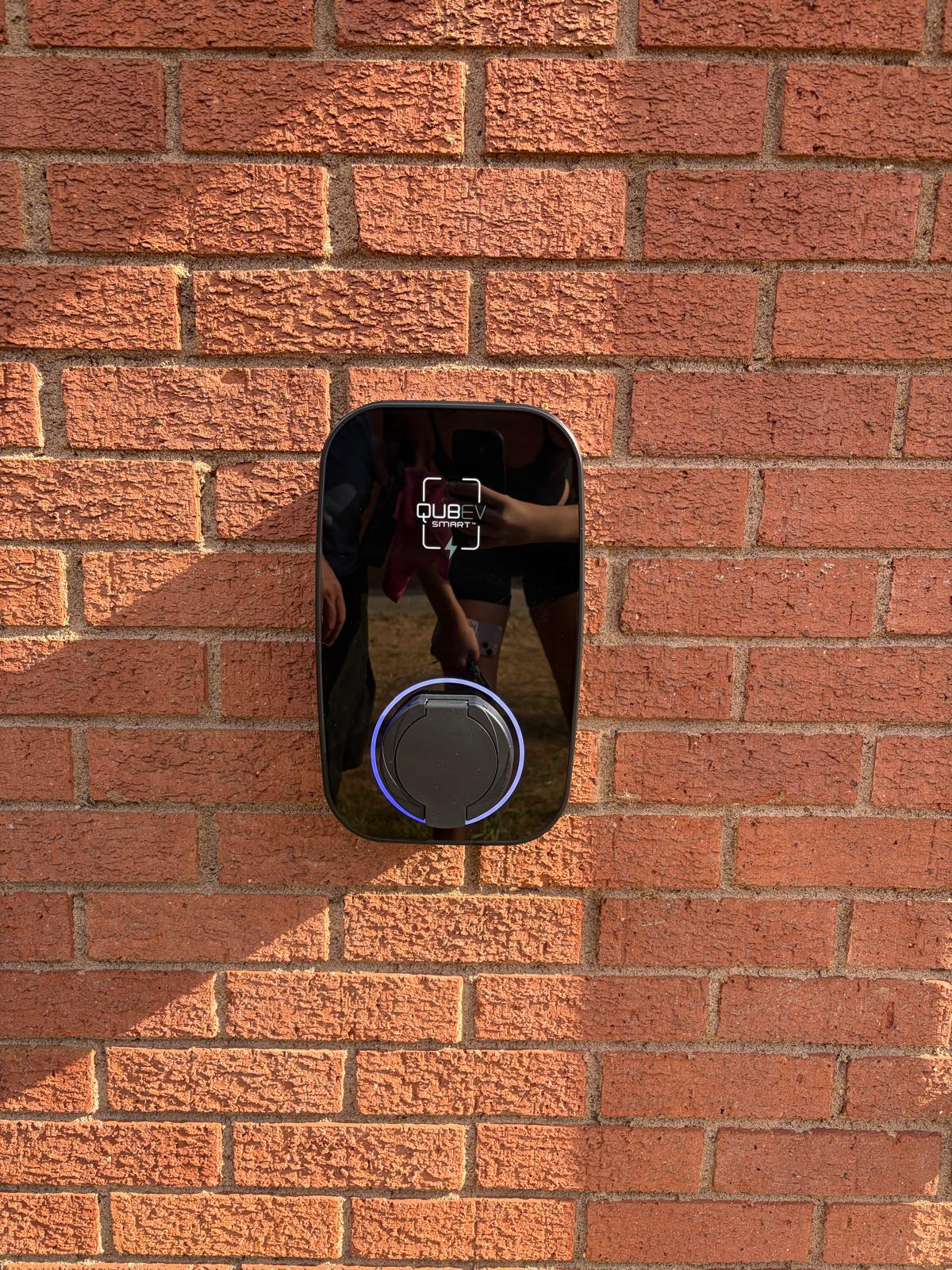
Location: Milton Keynes · Property type: 1980s house with attached garage · Charger: Qubev Smart Charger · Cable run: Approx. 5m · Installation time: Around 3 hours
The homeowner wanted a straightforward home EV charger installation at their property in Milton Keynes, with the charger positioned on the attached garage.
The consumer unit was in the garage, so the cable run to the charger was only around 5 metres. The physical installation itself was relatively simple. However, during our checks we found an issue with the property’s existing electrical setup that needed to be resolved before the charger could be installed safely.
The property still had an older consumer unit which wasn’t suitable for supplying the new EV charging circuit.
The customer did not want the additional cost of installing and testing a new consumer unit, so we installed a dedicated standalone EV mini-consumer unit specifically for the charger.
This gave the new EV charging circuit the correct protection while allowing the existing consumer unit to remain in place.
The main challenge on this installation wasn’t the cable run — at approximately 5 metres, that part of the job was straightforward.
The important issue was making sure the charger had the correct electrical protection. EV chargers place a significant continuous load on a property’s electrical installation, so they need to be connected to a circuit designed and protected specifically for EV charging.
An older consumer unit doesn’t necessarily mean you need a complete consumer unit replacement. In some properties, installing a dedicated EV sub-board can be a more practical and cost-effective solution.
We installed a dedicated standalone EV mini-consumer unit alongside the existing electrical installation.
From this new board, we ran a dedicated circuit approximately 5 metres to the Qubev Smart Charger on the attached garage.
This gave the charger its own properly protected supply without requiring unnecessary alterations to the rest of the property’s electrical system.
Once installed, the new EV charging circuit and charger were fully tested in accordance with current UK electrical installation requirements.
Relevant electrical testing and certification should always form part of a professional EV charger installation, ensuring the new circuit and protective devices are operating correctly before the charger is put into service.
For homeowners looking for EV charger installation in Milton Keynes, we can assess the existing electrical installation and recommend the most appropriate way to safely install a home EV charger.
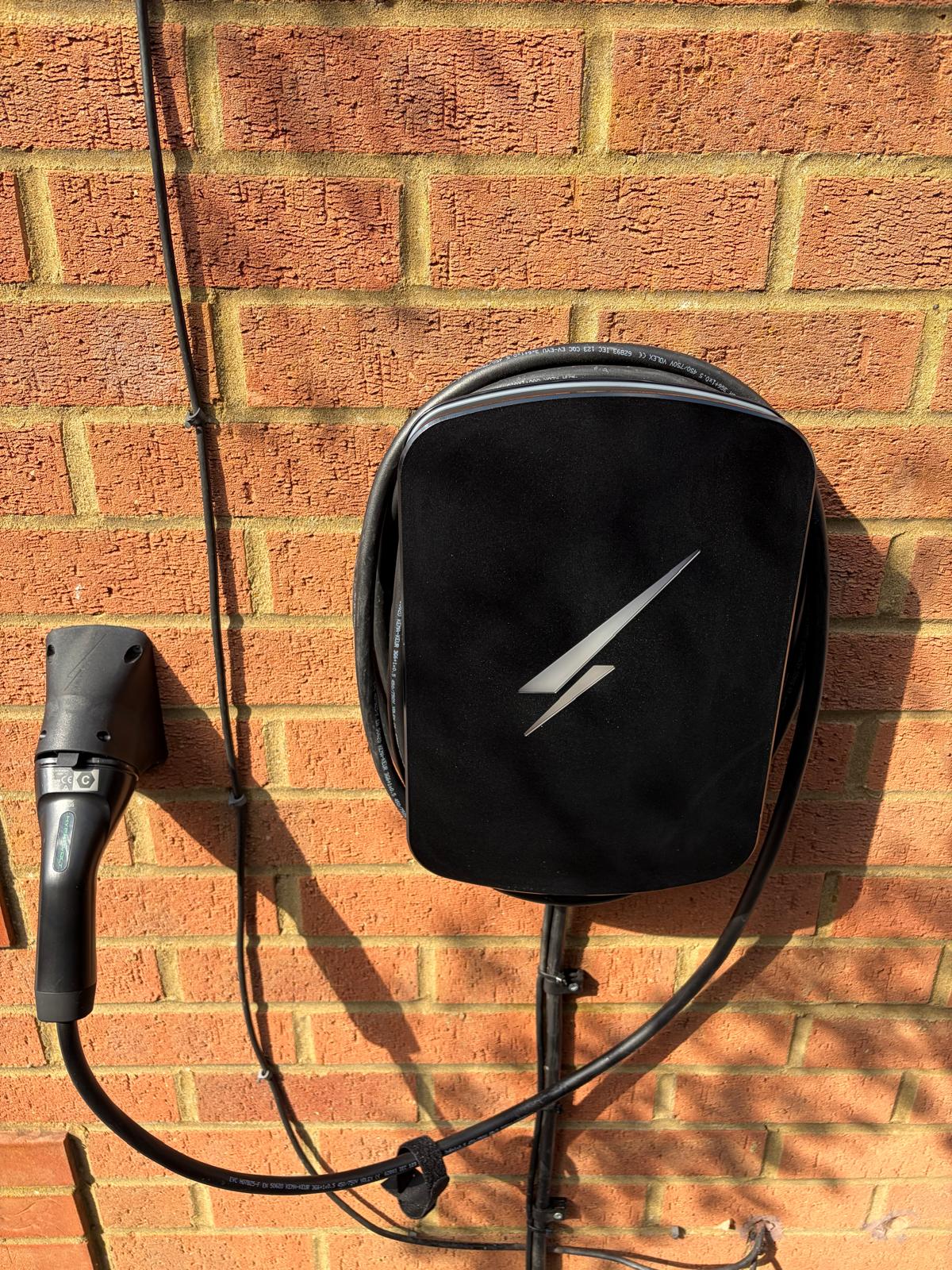
Location: Milton Keynes · Property type: 2010s new-build house · Cable run: Approx. 15m · Charger type: Hypervolt Home Pro 3 – Tethered 7m cable · Existing consumer unit: Suitable for EV charger installation
The homeowner wanted a home EV charger installed at their modern property in Milton Keynes.
As the house was built in the 2010s, the existing electrical installation was up to recent building regulations and the consumer unit was suitable for supplying a dedicated EV charging circuit.
The main consideration on this job was the distance between the consumer unit and the chosen charger location.
After checking the existing electrical installation, we confirmed that the consumer unit had sufficient capacity and suitable provision for the new EV charging circuit.
There was no requirement for a replacement consumer unit or separate EV sub-board, which kept the electrical side of the installation relatively straightforward.
The challenge was the cable route.
The charger position was approximately 15 metres from the consumer unit, with the cable needing to run almost the full length of the house before reaching the installation point.
A 15-metre cable run isn’t unusually long for a home EV charger installation, but the route the cable needs to take can make a significant difference to the amount of work involved.
On this property, we needed to carefully route the new EV cable along the length of the house while keeping the finished installation neat and discreet.
This required more planning and installation work than a charger positioned directly next to the consumer unit.
We planned the cable route before starting the installation so that the new circuit could reach the charger without unnecessary visible cabling.
A dedicated EV charging circuit was then run approximately 15 metres from the existing consumer unit, along the length of the property and to the charger location.
Once the installation was complete, the new EV charging circuit was fully tested before being put into service.
Professional EV charger installations should include the appropriate electrical testing and certification, confirming that the new circuit, protective devices and charger have been installed correctly and are safe to use.
For homeowners looking for EV charger installation in Milton Keynes, the existing consumer unit, charger location and cable route are some of the main factors we assess when planning an installation.
Location: Bedford · Property type: Detached house, garage separate from main building · Cable run: Approx. 30m· · Existing consumer unit: Not suitable for EV charger installation
A homeowner near Bedford got in touch wanting to charge their EV overnight, but their only realistic parking spot was next to a detached garage roughly [30–40m] from the house. It’s a layout we see a fair amount around the older, more rural parts of Bedfordshire — plenty of driveway space, but the electrics were never designed with anything like this in mind.
The garage had a single old lighting circuit and nothing else — no spare capacity and the consumer unit in the house was already close to full. The distance alone meant we couldn’t just run a circuit off the existing board; we needed to think about voltage drop and cable sizing properly rather than just extending what was there.
Two things made this one non-trivial: the [30–40m] cable run, and the fact the garage had no meaningful electrical supply of its own. Running a long cable safely to BS 7671 standard means the cable size, route, and protection all have to be calculated for that distance.
We installed a dedicated supply from the house to the garage, sized correctly for both the charger’s load and some headroom for future use. Rather than just feeding the charger directly, we put in a small distribution board in the garage itself with proper RCD/MCB protection — that meant we could also give the customer two socket outlets in the garage as part of the same visit, which they hadn’t originally asked for but were glad to have.
All work was fully tested and certified to current UK electrical standards (BS 7671).